Top videos

ملت شریف ایران، تمام تلاش ما در کافه اندیشه این است که صدای مردم ایران، ایرانگرایی، شهریار ایران زمین رضا شاه دوم - و خاندان ایرانساز پهلوی باشیم.
شما بزرگواران میتوانید از گزینه های
✅ Supper Thanks
✅ Join
لایک، کامنت به انگلیسی و فارسی و باشتراک گذاشتن ویدئوها با دوستان و در گروهها از کافه اندیشه حمایت کنید.
سپاس از مهرتان 🙏🏼
پاینده ایران 💚 🤍 ♥️
✅ لینک دسترسی و عضویت در کانال یوتیوب 👇🏻
https://youtube.com/@cafeandis....heh5016?si=ZtYEgcQOH
✅ لینک پی پل برای پشتیبانی مالی👇🏻
https://www.paypal.com/paypalme/mahmoudrezaei
✅ لینک کانال اینستاگرام 👇🏻
https://www.instagram.com/cafe....andisheh?igsh=MW1hcn
✅ لینک توییتر (ایکس)
https://x.com/cafeandisheh?t=MyWDoEnV2Le_CJz4YNHp-Q&s=09
#ایران
#إسرائيل
#جنگ_ایران_اسراییل
#شاهزاده_رضا_پهلوی
#کافه_اندیشه
@cafeandisheh5016
#cafeandisheh

Tonight on *24 with Fardad Farahzad* President Donald Trump says the current situation in Iran will end soon, while his administration intensifies economic pressure by imposing new sanctions on individuals and entities accused of helping supply Iran’s defense industry. Vice President J.D. Vance says Tehran made a mistake by violating the Islamabad agreement and says Washington believes Mojtaba Khamenei is alive but may not be involved in the Islamic Republic’s day-to-day decision-making. Meanwhile, the Revolutionary Guards warn that Iran has upgraded its military capabilities and could deploy new weapons in another conflict. The program also examines the investigation into a suspicious incident near a British air base used by U.S. forces, with authorities investigating possible links to a foreign state while Iran denies any involvement.
امشب در «۲۴ با فرداد فرحزاد»، دونالد ترامپ میگوید وضعیت کنونی در ایران بهزودی به پایان خواهد رسید؛ همزمان دولت او با اعمال تحریمهای تازه علیه افراد و نهادهایی که به تامین تجهیزات برای صنایع دفاعی جمهوری اسلامی متهم شدهاند، فشار اقتصادی بر تهران را افزایش میدهد. جیدی ونس، معاون رئیسجمهوری آمریکا، میگوید تهران با نقض تفاهمنامه اسلامآباد مرتکب اشتباه شده و واشینگتن بر این باور است که مجتبی خامنهای زنده است، اما ممکن است در تصمیمگیریهای روزمره جمهوری اسلامی نقش مستقیمی نداشته باشد. همزمان سپاه پاسداران هشدار میدهد که توان نظامی خود را ارتقا داده و در صورت وقوع جنگی دیگر ممکن است از سلاحهای جدید استفاده کند. برنامه همچنین تحقیقات درباره حادثهای مشکوک در نزدیکی یک پایگاه هوایی بریتانیا مورد استفاده نیروهای آمریکایی را بررسی میکند؛ مقامها در حال بررسی احتمال ارتباط این پرونده با یک دولت خارجی هستند و ایران هرگونه دخالت را رد کرده است.

Tonight on *24 with Fardad Farahzad* Washington says a breakthrough in talks with Tehran could come within days, as U.S. officials express optimism about a temporary ceasefire and a possible agreement to reopen the Strait of Hormuz. At the same time, the United States intensifies economic pressure by sanctioning a network of exchange houses and front companies accused of secretly moving hundreds of millions of dollars for the Islamic Republic. The program also examines growing divisions in Washington over diplomacy versus regime change, the U.S. Senate's push for broader sanctions on Iran, the strategic impact of the maritime blockade, and the signing of a new trilateral defense pact between Saudi Arabia, Turkey, and Pakistan amid escalating regional tensions.
امشب در «۲۴ با فرداد فرحزاد»، مقامهای آمریکایی از احتمال دستیابی به توافق با تهران ظرف روزهای آینده خبر میدهند و نسبت به آتشبس موقت و بازگشایی تنگه هرمز ابراز امیدواری میکنند. همزمان واشینگتن با تحریم شبکهای از صرافیها و شرکتهای پوششی متهم به انتقال مخفیانه صدها میلیون دلار برای جمهوری اسلامی، فشار اقتصادی بر تهران را افزایش داده است. برنامه همچنین به اختلافنظرها در آمریکا بر سر دیپلماسی یا تغییر حکومت، تلاش سنای آمریکا برای گسترش تحریمها علیه جمهوری اسلامی، تأثیر محاصره دریایی بر اقتصاد ایران و امضای پیمان دفاعی سهجانبه میان عربستان سعودی، ترکیه و پاکستان در بحبوحه تنشهای منطقهای میپردازد.

💎 Special Offer: starting from just $4.99! Get 50% OFF full access to the map + exclusive strategic updates: https://www.rfunews.com/pricing
In this video, we will analyze Ukrainian amphibious attack on the Kinburn Spit.
Here, Ukrainian forces are steadily reshaping the battlefield with drones that pressure Russian positions along the spits and coastline in southwestern Ukraine. The expanded campaign is creating panic among Russian commanders, who increasingly fear that these Ukrainian operations may actually be preparing the conditions for something much larger.
Recently released Ukrainian footage illustrates these Russian fears, as one Ukrainian Bayraktar drone destroyed a Russian boat attempting to transport personnel or supplies to the Tenderivska Spit. Another clip shows a quick Russian boat trying to exploit its high speed, but without success, as it is destroyed even before reaching the shore. While the Bayraktar has spent much of the past two years operating primarily as a reconnaissance asset because of Russian air defenses, the systematic Ukrainian attacks against Russian radar stations and air-defense systems have opened growing gaps, allowing larger drones to operate much closer to the front once again.
At the same time, Ukraine's Fortieth Marine Brigade employed Barracuda unmanned naval vessels that function as mobile drone carriers. They allowed the transportation of FPV and heavy bomber drones, used to strike observation posts, ammunition depots and logistics positions, as confirmed by Ukrainian footage. Other Barracuda drones were captured carrying anti-aircraft missiles for self-protection, further eroding Russia's ability to counter their activity. Together with persistent Ukrainian surveillance, these operations are steadily making Russian positions along the Tenderivska Spit and nearby coastlines increasingly difficult to hold.
This sustained pressure forced many Russian analysts to think that Ukraine is preparing something far more ambitious than drone strikes meant simply to eliminate Russian soldiers and weaken their overall posture. Some of them are increasingly speculating that Ukrainian special forces are rehearsing operations around the Kinburn Peninsula, pointing to reported boat exercises and smoke-screen training near the Yuzhni Bug River leading toward the Dnipro-Bug estuary. According to these Russian assessments, more than two thousand five hundred Ukrainian soldiers from various formations subordinate to the Thirtieth Marine Corps have reportedly assembled in the direction. They are supported by forty-six boats, over one hundred inflatable boats, at least nine naval drones, and additional armored vehicles and artillery systems.
Concerned that these preparations could precede an amphibious operation, Russian forces launched a strike against what they described as a Ukrainian staging area along the Yuzhni Bug River, using 5 Geranium drones to strike at buildings and grass on the territory of the base. Russian analysts pointed out the attack was to disrupt any Ukrainian operation before it began, claiming it had also damaged boats and equipment, although no visual confirmation of any of these losses has emerged.
Russian analysts believe the Ukrainian plan for an amphibious attack would unfold in several carefully coordinated phases. Ukraine would initially conduct a limited diversionary landing near Pokrovske using a relatively small force designed to probe Russian defenses while establishing a temporary beachhead. Fire support would reportedly come from rocket-armed naval drones and FPV drones operating from both landing craft and nearby positions on the mainland. Once Russian defenses would be pinned down, a larger assault force of up to eight hundred troops would land further along the coastline, aiming to isolate nearby settlements before advancing toward the administrative boundary separating Kherson and Mykolaiv regions. Simultaneously, additional activity around other settlements along the coastline could divide Russian attention, while specialized Ukrainian Sargan-class naval drones can clear the Russian minefields protecting the beaches.
What makes this Russian fear much more plausible today than in previous years is the changing balance of capabilities. Prominent Russian military analysts argue that their logistics throughout Russian-controlled southern Ukraine have come under immense Ukrainian pressure, while the relatively short distance of three and a half kilometers between Ukrainian-controlled Ochakiv and the Kinburn Peninsula simplifies amphibious operations. They state that Ukraine now also possesses far greater numbers of naval and airborne drones, with these variants now capable of providing reconnaissance, fire support, precision strikes, and even logistical and casualty evacuation support throughout such an operation.

(Jul 28 2026) پخش زنده ۲۴ با فرداد فرحزاد | سهشنبه، ۶ مرداد

Join this channel to get access to perks:
https://www.youtube.com/channe....l/UCsMSFwBF-4SWD5msA

🔴 Become a member of Tousi TV+ at https://tousi.tv
📲 Download Tousi TV app — available on iPhone and Android.
🌎 Get access to The Situation Room: https://members.thesituationro....om.global/?ref=mahya
X: @TousiTVOfficial
Instagram: @TousiTV
TikTok: @TousiTVOfficial

🔴 Join Tousi TV+ today and get access to premium shows, documentaries, and our chat forum: https://tousi.tv
🇬🇧 Get your own 'Unite The Kingdom' merchandise: https://mahyartousi.creator-spring.com/
💙 Support Mahyar via donation link: https://tousi.tv/support-us/
X: @MahyarTousi
Instagram: Mahyar_Tousi
🔴 YOU ARE MISSING HALF OF OUR VIDEOS! Subscribe to unlock all out reports and support our work: https://www.youtube.com/channe....l/UCcNB1tZYpeDetqCad
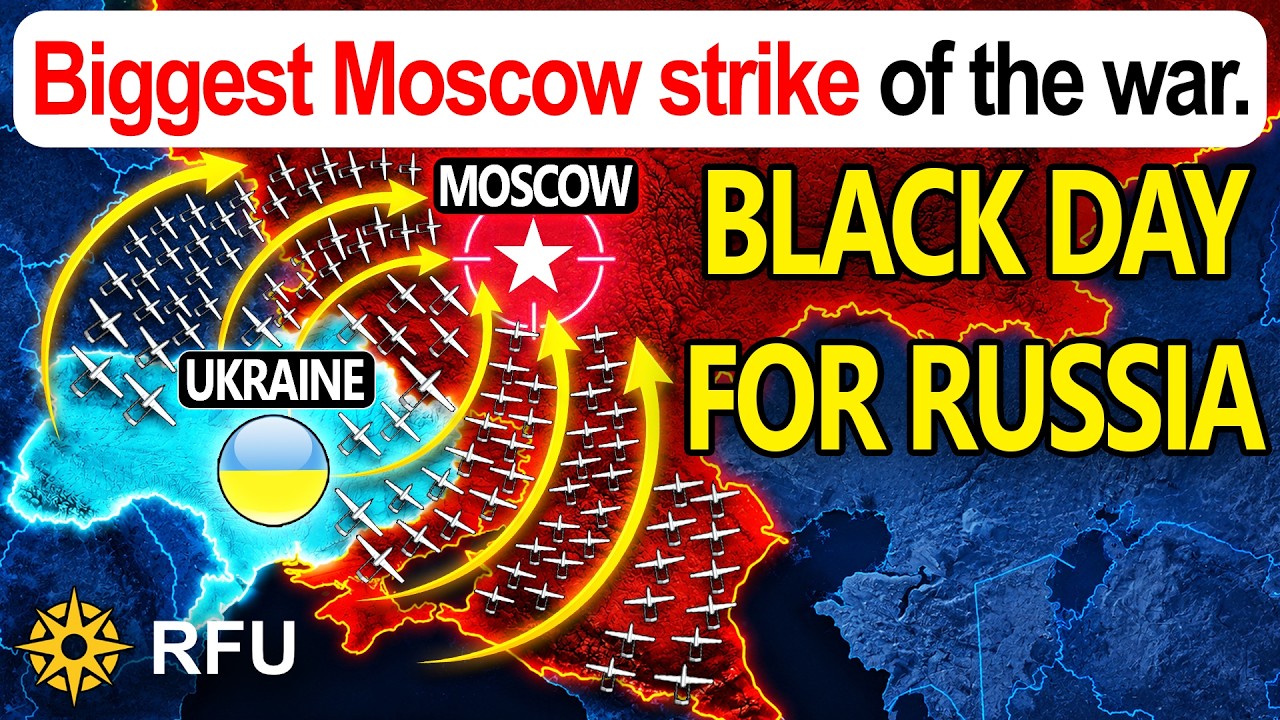
Today, Moscow experienced the largest Ukrainian drone attack of the war, with more than six-hundred-and-fifty drones targeting the Russian capital and the surrounding region overnight. According to Moscow Mayor Sergei Sobyanin, most of them were reportedly heading toward Moscow and were intercepted, while around one-hundred-and-eighty of them were brought down over the Moscow region. Even accepting those Russian claims, Ukrainian drones still penetrated the wider defensive network, making this the most extensive assault yet against Russia's political and economic center, affecting multiple targets simultaneously. A Wildberries warehouse caught fire after being struck, while witness footage showed visible damage despite company statements minimizing the incident. Power infrastructure was also hit, with damage to equipment cutting electricity to more than ten thousand consumers and nearly fifty important government facilities. Russian authorities acknowledged this was the first outage of such scale in the Moscow region, while local reports also described a fire near the Kapotnya refinery, damage to various buildings, vehicles, and a transformer substation, and all four Moscow airports imposed flight restrictions as the raid continued through the night and into the early morning.
This attack represents the latest stage of an escalating Ukrainian campaign against Moscow that has intensified throughout the past week. Only hours earlier, on the sixteenth of August, the Moscow region also faced an enormous drone raid, with Russian officials reporting approximately six-hundred incoming drones and more than two-hundred intercepted over the region. During that operation, Ukrainian drones successfully struck the Severnoye Domodedovo warehouse hub, setting one of Russia's largest production and logistics centers ablaze.
At the same time, Ukrainian drones ignited the massive Wildberries logistics complex in Koledino near Moscow. Covering roughly a quarter of a million square meters, the facility served as Wildberries' largest logistics hub after the destruction of its Elektrostal warehouse in July. Satellite imagery and footage from the scene indicated the complex was completely destroyed despite extensive firefighting efforts involving helicopters. Independent estimates suggested that goods worth nearly one billion US dollars were lost, as the warehouse had been central to maintaining one-to-two-day deliveries across Moscow and the surrounding region.
The Moscow campaign has extended well beyond commercial warehouses, as earlier attacks targeted the Central Research Institute of Machine Building, a major Russian aerospace and rocket engineering research center, causing significant damage to the building. Another strike near the Wildberries logistics center in Novoselki near Moscow damaged a nearby power substation and administrative building.
These operations reveal a consistent pattern, as Ukraine continues to systematically target logistics hubs, research facilities, warehouses, and supporting infrastructure around Moscow, gradually increasing pressure on both Russia's economy and its ability to sustain military production and distribution. Instead of concentrating on a single type of target, the campaign forces Russian authorities to defend dozens of important facilities simultaneously, stretching already limited air-defense resources across an ever-growing number of critical sites. At the same time, Russia's air-defense network faces mounting strain from depleted interceptor missile inventories, growing pressure on radar coverage, and an increasing shortage of experienced operators.
Perhaps the most significant trend is the sheer scale of Ukraine's expanding drone operations. Only several months ago, raids involving around three-hundred long-range drones against multiple targets represented an exceptional effort. That later increased to approximately six-hundred drones directed across several regions during the same night. Now Moscow alone is reportedly facing more than six-hundred-and-fifty Ukrainian drones night after night. This rapid growth reflects Ukraine's expanding production capacity and continuous development of new long-range unmanned systems capable of reaching deeper inside Russia in greater numbers.
Overall, as larger Ukrainian drone swarms arrive more frequently, the burden on the Russian defenders continues rising, increasing the risks of interception failures, infrastructure damage, and even friendly-fire incidents. If Ukraine maintains its current production trajectory while further refining its long-range drone capabilities, the scale and intensity of future attacks on Moscow and other strategic regions will continue growing, putting Russian officials under more pressure.
🔴 YOU ARE MISSING HALF OF OUR VIDEOS! Subscribe to unlock all out reports and support our work: https://www.youtube.com/channe....l/UCcNB1tZYpeDetqCad
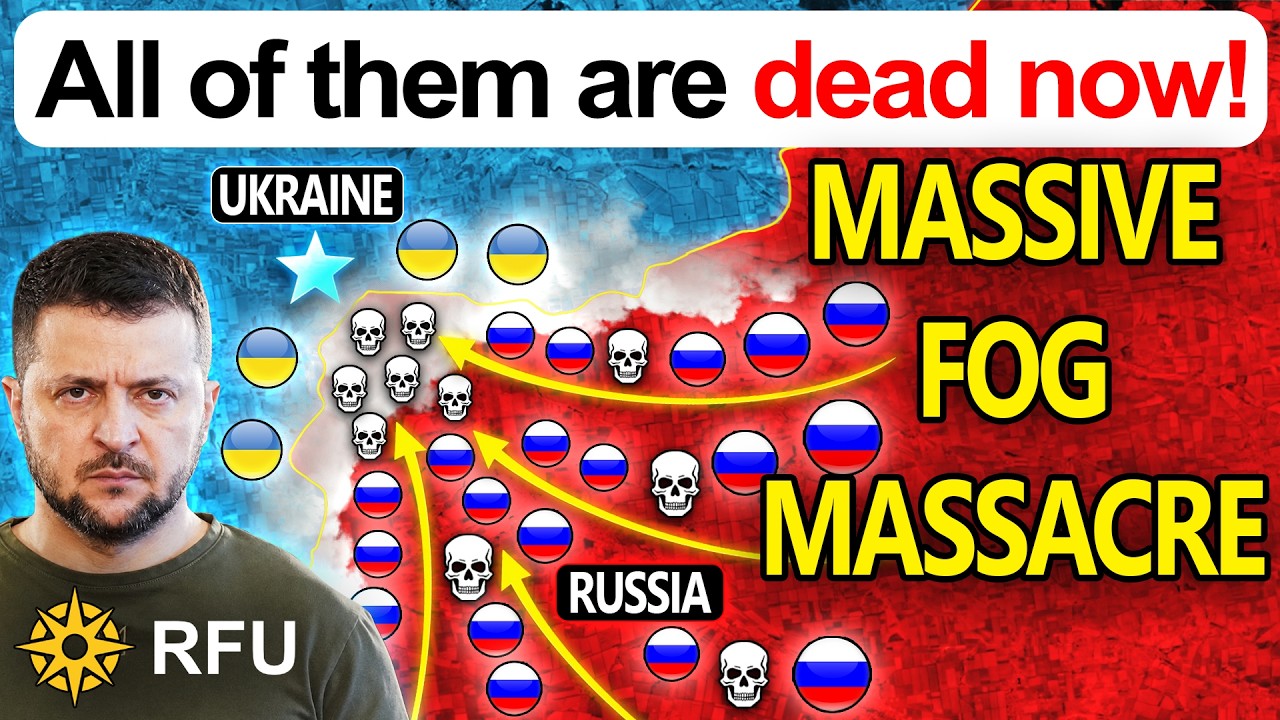
Today, a Ukrainian video was released from an intense fog battle near Vyshneve in the Dnipropetrovsk Region that unfolded under conditions that initially favored the attacking Russian force. Thick morning fog along the Yanchur River reduced visibility to only a few meters for both Ukrainian soldiers and drone operations. Hoping to exploit the weather, Russian troops launched a surprise assault against Ukrainian positions. Although the defenders could see almost nothing, they soon heard the sound of approaching engines. Ukrainian drone operators immediately began searching the surrounding area despite the poor visibility and eventually located two Russian Ural trucks and a buggy carrying roughly forty soldiers toward the southern edge of the village. The dense fog allowed the Russian infantry to dismount only about one-hundred-and-fifty meters from a Ukrainian observation post defended by just three soldiers. The Ukrainians immediately occupied firing positions inside the outermost house while Russian troops advanced toward them through the mist, triggering a close-range firefight.
Looking through the windows, the Ukrainians confirmed at least ten Russian soldiers nearby but suspected many more were concealed by the fog. Their battalion commander immediately improvised and redirected a ground drone toward the defenders to function as a mobile reconnaissance platform. Because visibility near ground level was slightly better than from the air, the robot transmitted a live video feed back to the commander, who began directing the defenders in real time. Guided by these images, the Ukrainian soldiers engaged approaching Russians with remarkable precision. The first two attackers advancing toward the house were shot almost immediately. Moments later, another pair attempted to approach from the right flank, but the live video feed warned the defenders exactly where they would appear. Two more Russians fell, followed shortly afterward by another pair, bringing the confirmed total eliminated by small-arms fire alone to six.
Moments later, a Ukrainian Vampire drone arrived carrying explosive munitions, but the fog remained too dense for its operator to see the battlefield directly, forcing the pilot to rely entirely on the live feed transmitted by the unmanned ground vehicle. Guided from the command post, the hexacopter released its munition directly into the center of another cluster of Russian troops, and when the smoke from the explosion settled, seven Russian soldiers were dead. As half an hour had passed, the weather began to improve, and the visibility increased, so Ukrainian FPV drones joined the fight. Russian infantry attempting to avoid accurate rifle fire from the defenders inside the house found themselves forced into the open streets, where drone operators engaged them one after another. The three defenders continued firing through windows while receiving continuous guidance, systematically clearing nearby garages, sheds, and concealed positions. The coordination between infantry, aerial drones, and the improvised reconnaissance ground vehicle transformed what had begun as a desperate defense into a devastating counterattack.
After roughly forty-five minutes of continuous fighting, around twenty Russian bodies lay immediately around the house where the three Ukrainian soldiers had held their ground. Approximately one hundred meters farther along the road, another twenty dead were counted. In total, around forty Russian soldiers were eliminated during the failed assault, despite the attackers enjoying an overwhelming numerical advantage of approximately thirteen to one. Remarkably, all three Ukrainian defenders survived the engagement, maintaining discipline throughout the battle and following every instruction transmitted by their commander over the radio.
The failed Russian assault also reflects the broader operational situation in this sector, as it was launched after Ukrainian forces had previously pushed the Russians back nearly ten kilometers. Such losses created considerable pressure on Russian headquarters to recover at least part of the lost territory quickly. Russian commanders rushed the available troops forward in an attempt to restore momentum and demonstrate progress to higher command by exploiting the dense fog, which proved a tactical gamble that backfired.
🔴 Our interactive news map: https://www.rfunews.com/map
🔴 Subscribe to unlock full access to the map + exclusive strategic insights: https://www.rfunews.com/pricing
Today, there are important updates from the Sumy direction.
Here, Russia desperately needed an innovative tactic to have a chance of breaking through the Ukrainian defenses. However, as the Russian assault units made the same mistake six times in a row, the consequences of their venture quickly became devastating.
Russia is becoming increasingly desperate because its conventional assaults in the area are failing, leaving its forces unable to break into the forest belt or suppress Ukrainian drone operators. The terrain has turned this sector into a deadly trap, as Ukrainians control the forest while Russian assault groups must cross open fields completely exposed to drone and artillery fire. Ukrainian forces maintain full fire control over the approaches, striking the enemy long before they reach the tree line. These repeated frontal assaults caused severe manpower losses and stalled advances entirely, forcing Russian commanders to abandon predictable attacks and search for a concealed infiltration route instead.
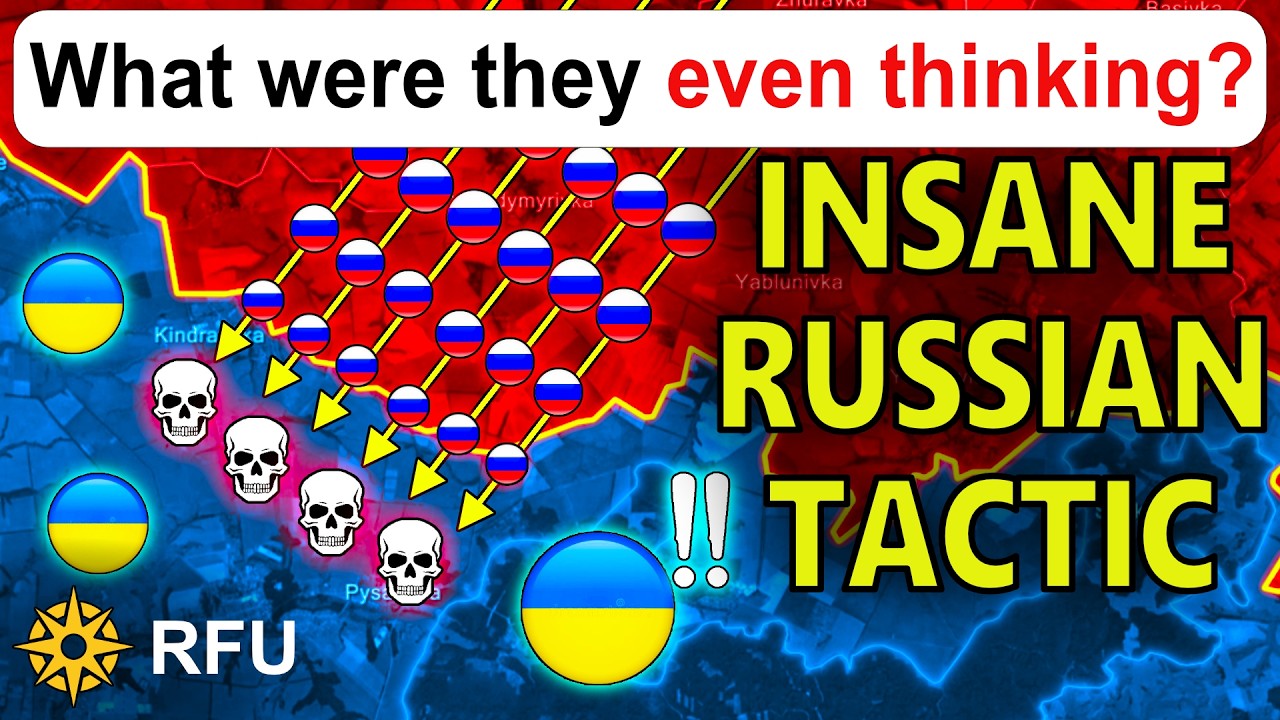
The plan was to replicate the success of the Russian infiltration into Sudzha during the Ukrainian incursion, when Russian soldiers used a pipeline as cover to bypass Ukrainian positions. Now, the Russian forces attempted to use the Urengoy–Pomary–Uzhgorod gas pipeline to surprise the Ukrainians again. Russian assault groups advanced seventeen kilometers through the pipeline system, entering via a collector shaft on Russian territory. Along the route, they established two rest points positioned approximately five kilometers apart, allowing troops to remain inside the pipeline for up to seven days. However, movement inside the pipeline is uncomfortable as it is only one hundred and forty centimeters in height, forcing Russians to crouch. Several openings were also prepared on the Ukrainian side. These serve as decoys to divert attention, while others were designated exit points for the assault teams.
The first assault began at dawn south of Yablunivka, where Russian infantry launched a coordinated attack, with some troops emerging from a gas pipeline while others advanced through nearby tree lines. Ukrainian drone operators quickly detected the movement and directed FPV drone strikes against the assault groups before they could disperse or take cover in forested areas. As a result of the Ukrainian crossfire with drones, the Russian forces were eliminated.
Despite the failure of the initial assault, Russian forces committed an even larger contingent to the operation. By monitoring all known and suspected exit points around the clock, Ukrainian soldiers could immediately direct FPV drones and artillery onto the new assault wave as soon as fifteen Russian soldiers emerged from the pipeline. The attack was quickly contained, while drone operators later eliminated the remaining infantry with grenade drops as they had nowhere to hide. During this engagement, forty-four Russian troops were killed in just thirty minutes, stopping the assault entirely.
In another attempt north of Nova Sich, six Russian soldiers advanced through the gas pipeline. Despite reducing the size of the infiltration unit to avoid detection, Ukrainian drones with thermal cameras spotted them even before they fully approached the defensive line. As additional Russian assault troops attempted to spread out after exiting the pipeline, Ukrainian artillery targeted them directly in the field, while the remaining soldiers were later neutralized by strikes from Vampire heavy drones.
Geolocated footage from a separate assault showed Russian troops emerging from the same pipeline southwest of the village of Yablunivka. This time, Russian forces also launched a diversionary attack using motorcycles and all-terrain vehicles from Russian-held territory. The diversion failed to distract Ukrainian defenders because drone surveillance was already expecting pipeline exits and refused to redirect resources, killing at least thirty-five Russian soldiers, wounding seventeen others, and destroying three motorcycles and four ATV.
During their next assault, twenty-nine Russian troops irrationally attempted the same tactic again. This time, the Ukrainian soldiers dispatched their quadcopter drones to eliminate the entire group before it could even reach the frontline. In total, Russian forces attempted variations of the same pipeline infiltration tactic five times over the course of a single month, with each assault launched less than a week after the previous one. By that stage, the element of surprise had completely disappeared as Ukrainians no longer needed to patrol large areas because they only had to monitor known pipeline exits.

President Donald Trump has said strikes on Iran could resume after November's midterm elections if Iran does not agree to a deal.
In the meantime, Iran's armed forces spokesman is warning neighboring countries not to rely on the US for security. He said this morning, "continued reliance on the so-called US security umbrella means accepting the heavy costs of a wrong calculation and decision."
Iran's foreign ministry spokesman also claiming the closure of the Strait of Hormuz was done "in accordance with international law."
Over the weekend, the US military said it was able to disable a vessel that was attempting to get around the blockade of Iranian ports.
Subscribe to LiveNOW from FOX! https://www.youtube.com/liveno....wfox?sub_confirmatio
Where to watch LiveNOW from FOX: https://www.livenowfox.com
Follow us @LiveNOWFOX on TikTok: https://www.tiktok.com/@livenowfox
Raw and unfiltered. Watch a non-stop stream of breaking news, live events and stories across the nation. Limited commentary. No opinion. Experience LiveNOW from FOX. Live news streaming channel when and where you need it.

Former Delta Force Operator Tyler Grey speaks with David Hookstead about the differences between The Unit and SEAL Team 6.
Make sure to like, subscribe and watch the full interview here: https://www.youtube.com/watch?v=luOveMjBaG8
You can follow David Hookstead at the following:
Instagram: @david_hookstead
Twitter: @dhookstead
Spotify: https://open.spotify.com/show/....0K13bLiIA43aRW1mo7aE
Apple podcasts: https://podcasts.apple.com/us/....podcast/outkicks-ame
💎 Help us expand the coverage! Subscription starts from just $4.99! Get 50% OFF full access to the map + exclusive strategic updates: https://www.rfunews.com/pricing
Today, the biggest development is coming from inside Russia itself.
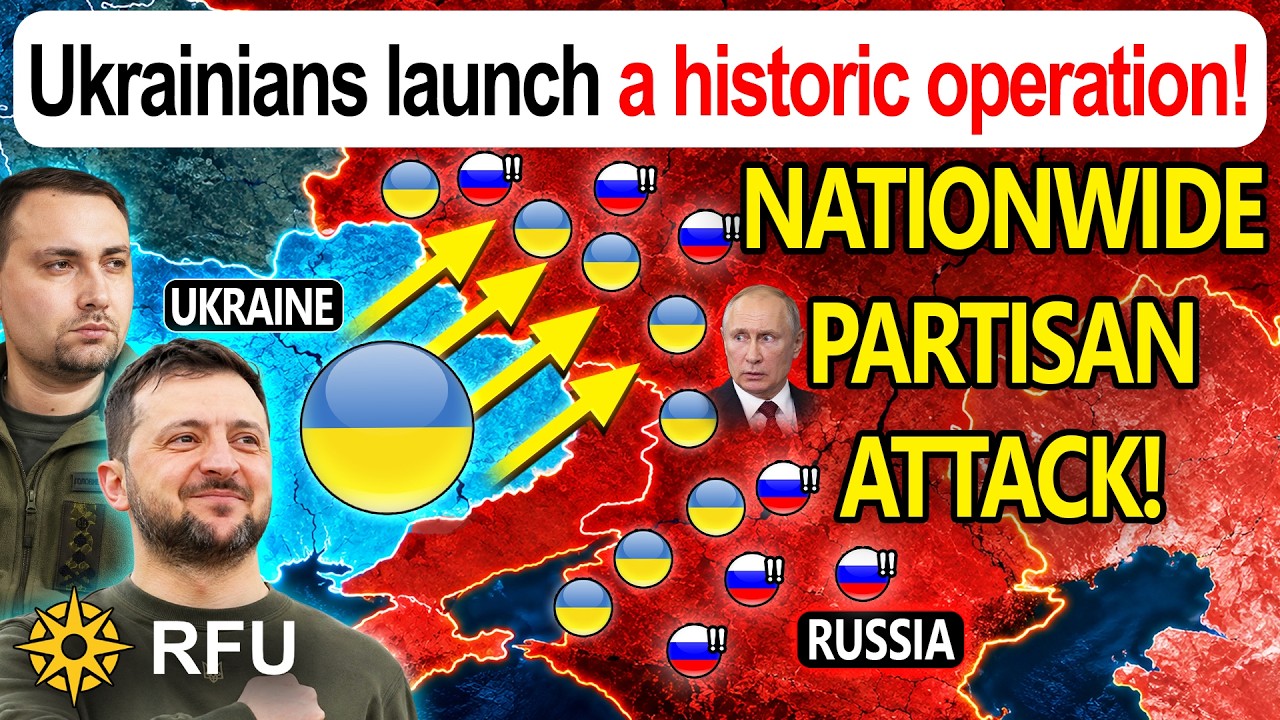
Here, Russian partisans fighting on the side of Ukraine conducted a large-scale operation deep into enemy-held territory that paralyzed the Russian railway logistics.
The main Ukrainian intelligence Directorate or GUR, recently released footage of this truly historic covert operation. Russian citizens fighting for Ukraine in the Freedom of Russia Legion were sent to infiltrate all across Russian-controlled Ukraine in one unified operation. Speaking Russian and pretending to be citizens of the Russian proxy states in Donbas, they remained undetected as they moved toward their target, the most critical component of the Russian army’s entire logistics network: their railway lines.
Simultaneously setting explosive charges onto the fuel carts in the middle of the night, all the major Russian railway hubs were targeted. Ukrainians blew up trains in the major cities of Donbas and Luhansk, which form the capitals of Russia’s LPR and DPR puppet states. They set fire to locomotives and rail relay stations in Mariupol and Melitopol, where all of Russia’s logistics in the Zaporizhia and Kherson regions flow through. The undercover operatives even penetrated as deep as Rostov-on-Don, where the main headquarters of Russian high command overseeing the war in Ukraine is operating from. Nowhere was safe, as the footage shows scores of trains and crucial railway infrastructure exploding and going up in flames.
Russians themselves responded with outrage. They complain that too many Russians inside of the country are increasingly showing support and favoritism toward Ukraine. They say that these people are responsible for regular partisan attacks inside of Russia and the Russian-controlled territories in Ukraine. This is not surprising however, as the Ukrainian intelligence directorate is actively advertising to people in these territories and opponents of Putin’s regime to get in contact with them to become a part of the resistance movement, including training, intelligence gathering, and even direct sabotage attacks.
Because of this, recent partisan attacks have spread to railway logistics in cities as far as Kemerovo, Tyumen, and Yekaterinburg. Here, three locomotives in dual-use by the Russian armed forces were burned down, paralyzing Russian transport capacity across the most important transport lines connecting Siberia with Russia-proper across the Ural mountains. Most often however, sabotage occurs much closer to the frontlines in Ukraine, where all disruptions are felt immediately on the front. Partizans set fire to railway cabinets in Luhansk, which ground transport to a temporary halt long enough for follow-up strike drones to take full advantage of the stationary trains. Vehicles used by Russian soldiers in the rear are also common targets for lower-level sabotage by resistance members, preventing transport of supplies, ammunition, and reinforcements to the front. While the impact of a single vehicle may seem small, this results in one less vehicle that Ukrainians have to deal with on the front, one Russian sector that starts running low on supplies, and fewer potential infiltrators causing a headache for Ukrainian forces in the rear.
Overall, if every minor action adds up to a consequential effect, Ukrainians just unleashed a tidal wave of frontline impact. The coordinated operation executed by volunteers of the Freedom of Russia Legion not only destroyed over ten thousand tons of fuel supplies, but the carriers and locomotives that cart supplies around as well. As the railway continues to form the backbone of the Russian army’s logistics, the disruptions and delays that this destruction has caused are significant. With Russian officials seemingly unable to stem the wave of resistance fighters operating not only within the Ukrainian territories they control, but throughout mainland Russia as well, the pressure is building up, and continued resistance becomes a more accessible option with every operation that passes.

🔴 Our interactive news map: https://www.rfunews.com/map
🔴 Subscribe to unlock full access to the map + exclusive strategic insights: https://www.rfunews.com/pricing
Today, the biggest news comes from the Russian Federation.
Here, separatists have emerged again to stage a coup and try to secede from Russia. However, what followed was a brutal crackdown and forced exile, showing that only oppression can hold the country together now.
Recently, Alexander Ivanov, a former parliamentarian from Yakutia, initially built his platform around claims that the Sakha people lacked political and cultural freedom, framing issues of language and identity as evidence of systemic inequality. He escalated this position by publicly entertaining the idea of Yakutia’s secession and amplifying his message through symbolic gestures, including recorded statements at the Independence Monument, which recast a regional discourse into a more overtly political challenge to the Russian state. His activities moved beyond domestic advocacy as he began cultivating international visibility, using foreign media outlets, particularly in Turkey, to project his narrative outward and aligning himself with circles linked to Pan Turkist ideology. This shift effectively transformed his position from a regional political stance into one with geopolitical implications, raising concerns about external influence and coordination. Moscow’s response followed this escalation as Ivanov was designated a foreign agent and stripped of his parliamentary mandate. By persistently promoting narratives of oppression and advocating separation, he directly undermined national unity.
The central authorities must suppress these separatist ideas before they spread to other regions and political spaces. Because of the developments in Yakutia, Russia must act now to prevent further disruptions in other problematic parts of the country. Notably, the risk is far greater than Ivanov's remarks because now these ideas can quickly proliferate, and other regional politicians and activists can join him and declare their desire for more autonomy or full independence. If other separatists see that Moscow cannot assert dominance, they will be inclined to act while the government is weak and occupied with waging a war in Ukraine.
These separatist tendencies are not limited to Yakutia but can be observed across several regions of Russia, taking different forms depending on local history and demographics, which makes it harder for Moscow to control. In the North Caucasus, separatism has historically taken the form of armed insurgency, as seen when the Chechen Republic of Ichkeria declared independence, leading to prolonged and violent conflict before federal control was reimposed. By contrast, in Dagestan, the issue is less about a single unified movement and more about fragmented proposals reflecting the republic’s ethnic complexity, which diffuses separatist sentiment. Proposals range from creating independent ethnic entities to forming a unified Dagestani state. Further north, in the Volga Federal District, movements are generally less militant and focus more on cultural autonomy and political rights among Turkic and Finno Ugric populations, indicating a more subtle approach compared to complete cessation or military action.
The drivers behind separatist sentiment across Russia’s regions include economic disparities, control over natural resources, and unequal burdens in military mobilization. Each region carries its own historical grievances and sources of tension with the central government. In many ethnic republics, where non Russian populations form majorities or significant minorities, separatist narratives are often rooted in nationalism, cultural preservation, and long-standing historical memory. Concerns about the disappearance of local languages and traditions intersect with perceptions that resource rich regions are economically exploited, with wealth extracted but insufficient reinvestment into local development or poverty reduction. Military mobilization has further intensified these grievances because it has been disproportionately affecting poorer, rural, and minority communities. As a result, certain ethnic groups, such as the Buryats and other indigenous peoples of Siberia, have appeared in casualty figures at rates exceeding their share of the overall population.

🔴 Become a member of Tousi TV+ at https://tousi.tv
📲 Download Tousi TV app — available on iPhone and Android.
🌎 Get access to The Situation Room: https://members.thesituationro....om.global/?ref=mahya
X: @TousiTVOfficial
Instagram: @TousiTV
TikTok: @TousiTVOfficial

به کانال جدید ما بپیوندید تا با ناگفتههای جذاب تاریخ ایران و جهان همراه شوید(Ghasedak Plus)
https://www.youtube.com/@ghasedakplus
برای دیدن ویدیوها و همچنین دانلود کتاب هایی که به عنوان منبع معرفی می شوند به کانال تلگرام قاصدک تی وی
مراجعه کنید:
لینک کانال:
https://t.me/GhasedakTV405
https://t.me/GhasedakTV405
https://t.me/GhasedakTV405
Join this channel to get access to perks:
https://www.youtube.com/channe....l/UCU-DW4PpGS-NAIrEi

ملت شریف ایران، تمام تلاش ما در کافه اندیشه این است که صدای مردم ایران، ایرانگرایی، شهریار ایران زمین رضا شاه دوم - و خاندان ایرانساز پهلوی باشیم.
شما بزرگواران میتوانید از گزینه های
✅ Supper Thanks
✅ Join
لایک، کامنت به انگلیسی و فارسی و باشتراک گذاشتن ویدئوها با دوستان و در گروهها از کافه اندیشه حمایت کنید.
سپاس از مهرتان 🙏🏼
پاینده ایران 💚 🤍 ♥️
✅ لینک دسترسی و عضویت در کانال یوتیوب 👇🏻
https://youtube.com/@cafeandis....heh5016?si=ZtYEgcQOH
✅ لینک پی پل برای پشتیبانی مالی👇🏻
https://www.paypal.com/paypalme/mahmoudrezaei
✅ لینک کانال اینستاگرام 👇🏻
https://www.instagram.com/cafe....andisheh?igsh=MW1hcn
✅ لینک توییتر (ایکس)
https://x.com/cafeandisheh?t=MyWDoEnV2Le_CJz4YNHp-Q&s=09
#ایران
#إسرائيل
#جنگ_ایران_اسراییل
#شاهزاده_رضا_پهلوی
#کافه_اندیشه
@cafeandisheh5016
#cafeandisheh

💎 Help us expand the coverage! Subscription starts from just $4.99! Get 50% OFF full access to the map + exclusive strategic updates: https://www.rfunews.com/pricing
Today, the biggest news comes from the Lyman direction.
Although the frontline around Lyman has barely moved, the intensity of the fighting has reached extraordinary levels. Russian forces are committing thousands of soldiers to repeated counterattacks in an effort to halt Ukrainian advances and restore their positions, but these assaults are coming at a tremendous cost. In Zarichne, Russian troops are attempting to push back Ukrainian infiltrators who are trying to cross the Zherebets River and advance into the centre of Torske. Meanwhile, in the forests east of Lyman, Ukrainian forces are clearing the remaining Russian positions north of Yampil. Russian troops are still present in the area, but their positions have become increasingly scattered, leaving them struggling to maintain a coherent bridgehead. Russia is also counterattacking inside Yampil itself, attempting to regain control of positions in the grey zone. Their objective is to reopen access to the vast forested areas beyond these positions, where Ukrainian forces could otherwise exploit gaps in Russian defences. These repeated attacks and counterattacks have gradually pushed the frontline towards a more stable position along the river, but that stability has come at a staggering human cost for the Russians.
At the end of September and the beginning of October, Russian forces suffered daily personnel losses exceeding two thousand on three separate occasions. On one of those days, reported losses reached two thousand and ninety, the highest daily figure since the beginning of Russia’s full-scale invasion. These losses reflect the intensity of Russia’s efforts to contain the Ukrainian counterattacks, as commanders continue sending troops into contested areas to prevent further advances and recover lost positions.
This is largely because Ukrainian forces eliminated Russia’s drone operators and specialist personnel during Operation Vivaldi. A notable part of the operation involved Ukrainian drone operators using unmanned ground vehicles to reach Russian positions in the rear. These ground drones were used to strike concealed Russian shelters, command posts, and locations where Russian forces were concentrating and launching drones. The third Assault Brigade said these strikes destroyed a large number of such positions, along with the personnel operating from them. With fewer experienced drone operators and other specialized personnel available to support the frontline, Russia has increasingly had to compensate by committing large numbers of conventional troops to plug gaps, reinforce threatened positions, and launch repeated counterattacks. As a result, Russia is committing a significant portion of its available reserves simply to slow the Ukrainian advance and temporarily stabilize the frontline. This may prevent a total collapse of the Russian line, but it also means that large numbers of troops are being consumed just to maintain the current defensive line rather than being preserved for future operations.
This could be exactly what Ukraine was planning from the beginning, as proven by the commander of the Third Army Corps. Andriy Biletsky said that the Russian prisoners of war were lucky to have surrendered early, because the next stage of the operation will make the situation a lot worse for Russians. Based on his remarks, it is highly likely that the Ukrainian commanders anticipated that the Russians would launch massive meat wave attacks once the scope of Ukraine's counterattack became clear. As a result of these preparation, the Russians were walking straight into a trap, leading to their massive losses.
Overall, the key issue is that Russia may be stabilizing the frontline while simultaneously exhausting the forces needed to hold it. By forcing Russia to commit more troops just to contain a limited area, Ukraine can turn every counterattack into a drain on Russia’s remaining combat power rather than simply fighting for territory. If Ukrainian commanders anticipated this response, the objective may have been not only to advance, but to provoke Russia into spending its reserves under increasingly unfavorable conditions. In that case, the real significance of the operation will be measured not by how far the frontline moves today, but by how much weaker Russia becomes when Ukraine launches its next phase.

news
