Top videos

🌱 نسخه کامل این اجرا در برنامه دیوان خیال
app.divanekhial.com/s/hVCdSHZZ
برای دسترسی به صدها اجرای کامل و رایگان میتونید برنامه «دیوان خیال» رو از طریق لینک موجود در پروفایل نصب کنید.
کافیه هر اجرا رو یکبار داخل برنامه بارگیری کنید تا بعد از اون، هر زمان و هر جا که خواستید، بدون نیاز به اینترنت بشنوید.
✨اجرایی دلنشین از غزل زیبای مولانا | دیوان شمس | غزل 578
مرا عهدیست با شادی که شادی آن من باشد
مرا قولیست با جانان که جانان جان من باشد

🌱نسخه کامل این اجرا در برنامه دیوان خیال
https://app.divanekhial.com/t/mP2FkPce
✨اجرایی روح نواز از غزل زیبای شهریار | گزیده غزلیات | غزل 103 تو بمان و دگران
برای دسترسی به صدها اجرای کامل و رایگان میتونید برنامه اختصاصی «دیوان خیال» رو نصب کنید.
از تو بگذشتم و بگذاشتمت با دگران
رفتم از کوی تو لیکن عقبِ سر نگران
ما گذشتیم و گذشت آنچه تو با ما کردی
تو بمان و دگران وای به حال دگران
رفته چون مه به محاقم که نشانم ندهند
هرچه آفاق بجویند کران تا به کران
میروم تا که به صاحبنظری بازرسم
محرم ما نبود دیدهٔ کوتهنظران
دل چون آینه اهل صفا میشکنند
که ز خود بیخبرند این ز خدا بیخبران
دل من دار که در زلف شکن در شکنت
یادگاریست ز سرحلقهٔ شوریدهسران
گل این باغ به جز حسرت و داغم نفزود
لالهرویا تو ببخشای به خونینجگران
ره بیدادگران بخت من آموخت ترا
ورنه دانم تو کجا و ره بیدادگران
سهل باشد همه بگذاشتن و بگذشتن
کاین بود عاقبت کار جهان گذران
شهریارا غم آوارگی و دربهدری
شورها در دلم انگیخته چون نوسفران
In this episode of The President’s Daily Brief:
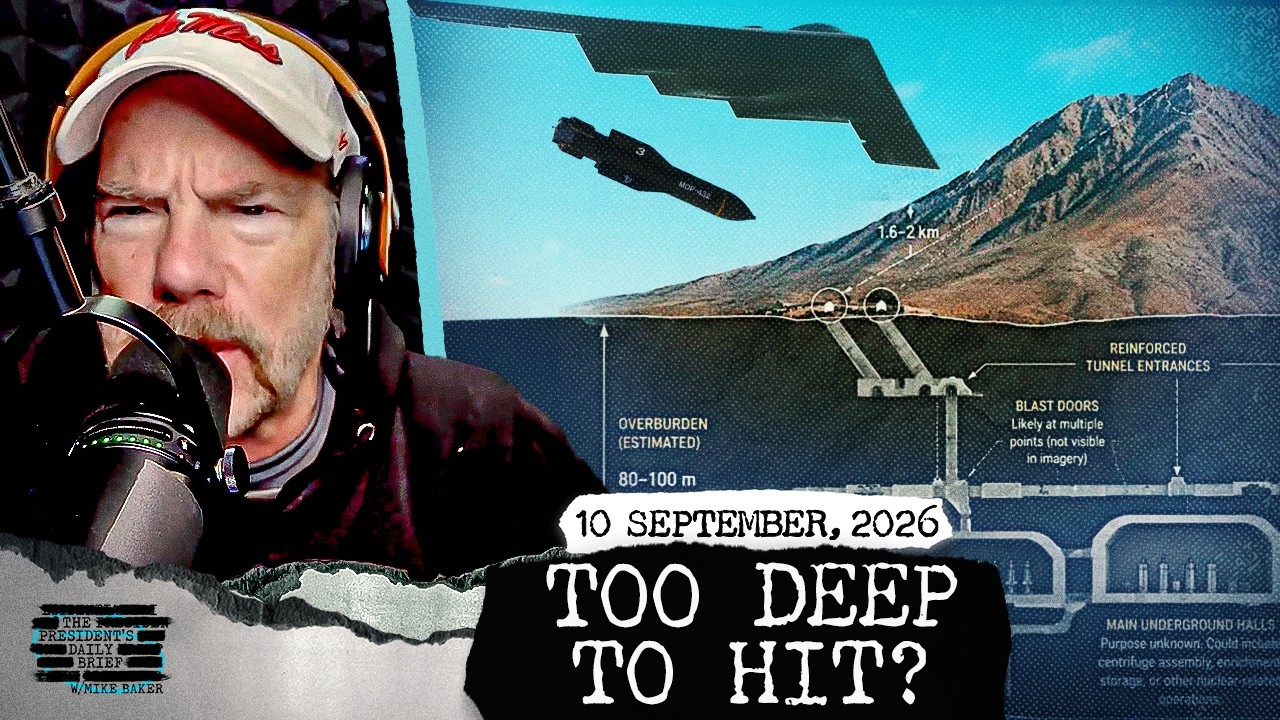
• Iran is accelerating construction at its deeply buried Pickaxe Mountain nuclear complex near Natanz, while the United States is reportedly examining how it could strike one of Tehran’s most difficult underground targets.
• A new report claims the UAE warned Israeli Prime Minister Benjamin Netanyahu days before October 7 that Hamas was preparing a major attack, an account Netanyahu’s office denies.
• North Korea has built another uranium-enrichment facility as inspectors warn that Pyongyang continues to expand the infrastructure supporting its nuclear weapons program.
• U.S. forces sink what officials describe as a cartel-linked floating refueling station used to support drug-trafficking boats operating at sea.
To listen to the show ad-free, become a premium member of The President’s Daily Brief by visiting https://PDBPremium.com.
Please remember to subscribe if you enjoyed this episode of The President’s Daily Brief.
ZBiotics: Go to https://zbiotics.com/PDBand use PDB at checkout for 15% off any first time orders of ZBiotics probiotics.
QUO: Make this the season where no opportunity slips away. Try QUO for free PLUS get 20% off your first 6 months when you go to https://Quo.com/PDB
Tax Relief Advocates: End your tax nightmare today by visiting us online at https://TRA.com or call 800-583-6515

Tonight on *24 with Fardad Farahzad* the United States launches what it describes as an unprecedented economic campaign against the Islamic Republic, aimed at cutting off the government’s financial lifelines and targeting networks used to sell oil and evade sanctions. Washington is expanding secondary sanctions and pressing other countries to reduce economic ties with Tehran, while the UAE has already suspended trade and China faces growing pressure over its dealings with Iran. The program also examines mounting economic pressure inside Iran, concerns that worsening living conditions could trigger fresh protests, and whether Tehran can withstand an increasingly coordinated campaign of financial isolation and maritime pressure.
امشب در «۲۴ با فرداد فرحزاد»، آمریکا کارزاری بیسابقه برای فشار اقتصادی بر جمهوری اسلامی آغاز کرده که هدف آن قطع شریانهای مالی حکومت و هدف قرار دادن شبکههای فروش نفت و دور زدن تحریمهاست. واشینگتن تحریمهای ثانویه را گسترش داده و کشورهای دیگر را برای کاهش روابط اقتصادی با تهران تحت فشار گذاشته است؛ در حالی که امارات پیشتر روابط تجاری را متوقف کرده و چین نیز با فشار فزاینده بر سر همکاریهای اقتصادی با ایران روبهروست. برنامه همچنین تشدید بحران اقتصادی در داخل ایران، نگرانی حکومت از تبدیل مشکلات معیشتی به اعتراضات تازه و این پرسش را بررسی میکند که جمهوری اسلامی تا چه اندازه میتواند در برابر انزوای مالی و فشار دریایی فزاینده مقاومت کند.

Tonight on *24 with Fardad Farahzad* Donald Trump announces that a preliminary agreement has been reached with Iran, declaring that the Strait of Hormuz will reopen and that Iran’s nuclear activities will be placed under strict international monitoring. The program examines the details of the emerging understanding between Tehran and Washington, unresolved disputes over sanctions, enriched uranium, and regional security, as well as sharp criticism from Israel, which insists it will continue its military operations and maintain its presence in southern Lebanon. The episode also explores growing political divisions inside Iran, reactions from regional and international powers, and the question of whether this fragile understanding can evolve into a lasting agreement.
امشب در «۲۴ با فرداد فرحزاد»، دونالد ترامپ از دستیابی به یک تفاهم اولیه با جمهوری اسلامی خبر میدهد و میگوید تنگه هرمز بازگشایی خواهد شد و برنامه هستهای ایران تحت نظارت سختگیرانه قرار میگیرد. برنامه به جزئیات این تفاهم، اختلافهای حلنشده بر سر تحریمها، اورانیوم غنیشده و امنیت منطقهای میپردازد؛ در حالی که اسرائیل با انتقاد از این روند تأکید میکند که عملیات نظامی خود را ادامه خواهد داد و نیروهایش را از جنوب لبنان خارج نخواهد کرد. همچنین واکنشهای داخلی در ایران، شکافهای سیاسی بر سر توافق و بازتاب بینالمللی این تحول بررسی میشود. آیا این تفاهم میتواند به یک توافق پایدار تبدیل شود یا تنها آغازی برای چالشهای تازه است؟

(Jul 06 2026) پخش زنده ۲۴ با فرداد فرحزاد | دوشنبه، ۱۵ تیر

(Aug 28 2026) پخش زنده ۲۴ با فرداد فرحزاد | جمعه، ۶ شهریور

(Jun 29 2026) پخش زنده ۲۴ با فرداد فرحزاد | دوشنبه، ۸ تیر

Join this channel to get access to perks:
https://www.youtube.com/channe....l/UCsMSFwBF-4SWD5msA

🔴 Become a member of Tousi TV+ at https://tousi.tv
📲 Download Tousi TV app — available on iPhone and Android.
🌎 Get access to The Situation Room: https://members.thesituationro....om.global/?ref=mahya
X: @TousiTVOfficial
Instagram: @TousiTV
TikTok: @TousiTVOfficial

🔴 Become a member of Tousi TV+ at https://tousi.tv
🛒 Get your Iran merch from our Tousi Store: https://www.tousistore.tv
📲 Download Tousi TV app — available on iPhone and Android.
X: @TousiTVOfficial
Instagram: @TousiTV
TikTok: @TousiTVOfficial

🔴 Use promo code TOUSIBABY to get 75% off Tousi TV+ Annual Memberships: https://tousi.tv
📲 Download Tousi TV app — available on iPhone and Android.
🌎 Get access to The Situation Room: https://members.thesituationro....om.global/?ref=mahya
X: @TousiTVOfficial
Instagram: @TousiTV
TikTok: @TousiTVOfficial

Original here: https://www.youtube.com/live/p....pq9toSNWDQ?si=F0eBCK
Tousi TV livestream recording about Henry Nowak
💎 Help us expand the coverage! Subscription starts from just $4.99! Get 50% OFF full access to the map + exclusive strategic updates: https://www.rfunews.com/pricing
Today, there is interesting news from the Pokrovsk direction.
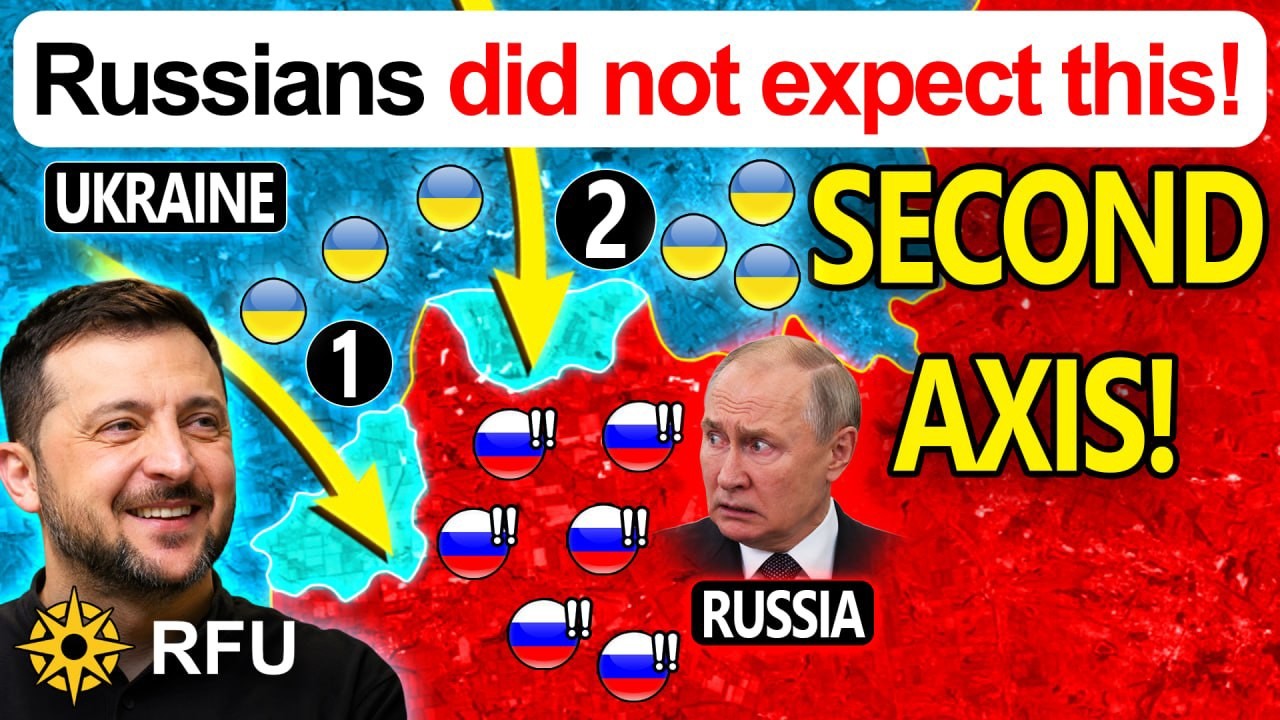
Here, the Ukrainian counteroffensive is expanding, with Ukrainian forces opening a second axis between Dobropillia and Druzhkivka to clear the remnants of the Russian troops trying to entrench themselves in the area. The Skala Assault Regiment, operating alongside the Twelfth Azov Brigade, launched clearing operations around Hruzke and Novomykolaivka, establishing a blocking line designed to stop Russian infiltration toward Druzhkivka.
The operation relied heavily on infantry because Russian troops had dispersed through interconnected forest belts. Ukrainian commanders divided the assault force across three routes, carefully bypassing mines before moving toward the predetermined Russian positions. Every Ukrainian group received specific objectives, including where to attack and approximately how many Russian soldiers were expected there.
Crossing open ground was particularly dangerous because Russian FPV drones were constantly searching for Ukrainian troops in an attempt to help Russians on the ground dig in the forest. However, due to their own drone reconnaissance, Ukrainian soldiers were informed that everyone ahead of them could be treated as hostile, while a commander monitored their movement through a drone’s live feed, warning assault groups whenever threats appeared.
After reaching their designated positions, Ukrainian soldiers concentrated inside the forest belts before beginning successive assaults. Close-range fighting followed, with some Ukrainian soldiers wounded, but the advance continued while other troops remained behind on the flanks. This became crucial when some Russian forces attempted to move behind the advancing Ukrainians and cut them off, but the Ukrainian soldiers waiting in ambush intercepted them instead.
The Ukrainians then captured Russian radios, creating an immediate advantage because they could hear Russian movements and learned that enemy soldiers intended to deploy anti-personnel mines ahead of the Ukrainian advance. Instead, the Russian groups were located and eliminated before completing their task.
Russian drone operators eventually identified the previous Ukrainian ambush position and attacked it with six drones, but the Ukrainians had already relocated and advanced another one hundred meters, discovering another Russian position and eliminating it through coordinated action. After each position was cleared, Ukrainian soldiers consolidated while fresh groups moved through them to continue the attack.
Where Russian resistance became stronger, Skala requested support from Azov drone operators, who struck Russian positions before infantry advanced. This created a repeating cycle: locate, strike, assault, consolidate, and introduce another group to build on the success so far. Eventually, Skala cleared the new Russian attempt to resurrect the pincer, allowing the Azov Brigade to introduce consolidation forces.
The broader context makes this operation particularly important, as Ukrainian forces were already attacking from the Dobropillia direction after clearing Russian infiltrators south of Hruzke, so Russia subsequently attempted to shift infiltration farther east toward Novomykolaivka. Capturing positions there could have reopened a vector toward Druzhkivka and ultimately increased pressure against the wider Kramatorsk defensive area. Instead, the First Azov Corps, reinforced by Skala, continued systematically searching the forests and eliminating Russian infiltration groups, which effectively creates a second Ukrainian counteroffensive axis alongside the continuing operations around Dobropillia. Rather than merely reacting to individual Russian infiltrations, Ukrainian forces are attempting to construct a continuous protective belt south of Druzhkivka, denying Russia the ability to transform scattered infiltration groups into a sustainable breakthrough.
Overall, the Ukrainian Pokrovsk counteroffensive is therefore becoming more than simply eliminating the original Russian penetration. Ukraine is expanding sideways, securing the approaches toward Druzhkivka and constructing another defensive barrier. If this continues, Russia’s attempt to exploit the area toward Druzhkivka and threaten Kramatorsk risks being dismantled before it can develop into something significant.
💎 Help us expand the coverage! Subscription starts from just $4.99! Get 50% OFF full access to the map + exclusive strategic updates: https://www.rfunews.com/pricing
Today, there are dangerous updates from the Russian Federation.
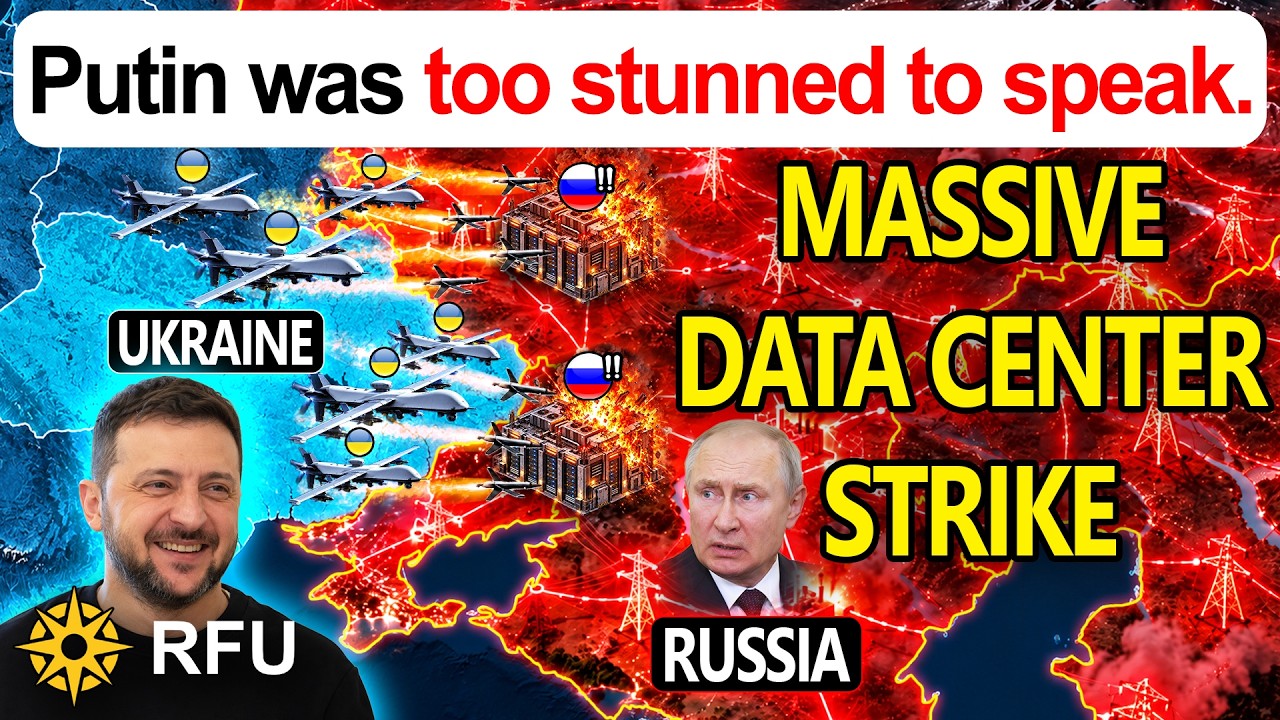
Here, Russia’s technology sector has suffered another major blow, as Ukrainian drones struck a second Yandex data center in just two days. This turns the initial attack into a broader campaign against Russian digital infrastructure, with President Volodymyr Zelensky confirming that Ukraine is responding to Moscow’s strikes against Ukrainian data centers.
In the morning hours today, drones struck Yandex’s facility in Kaluga, southwest of Moscow. Russian air defenses reportedly operated throughout the night, with regional authorities claiming twenty-six Ukrainian drones were intercepted. However, the facility suffered damage, as seen in footage published by locals, and later Yandex confirmed that several data-center modules were completely disabled, halting the operation of the data center.
The complex accommodates more than three-thousand-eight-hundred server racks, making it another significant component of Russia’s digital economy, as Yandex warned its customers that some services will experience interruptions while company engineers started assessing the damage.
And this was the second successful attack in just forty-eight hours, as Ukrainian drones struck Yandex’s largest data center in Sasovo yesterday, triggering a major fire and forcing operations to stop. The consequences are particularly serious because the facility houses two of the three supercomputers used to develop Yandex’s artificial-intelligence models, and Yandex subsequently acknowledged that the destruction was so extensive that it could not determine whether the damaged equipment could even be restored. Together, the attacks have affected two of Yandex’s five major data centers, representing forty percent of its principal facilities, eliminating this computing capacity and crippling critical infrastructure.
Yandex itself described data centers as the technological heart of its operations, as millions of Russians depend upon its services for navigation, transportation, entertainment, cloud storage, and everyday information. Hundreds of thousands of businesses also rely on its infrastructure for commercial operations. Normally, Yandex could compensate for damaged equipment by transferring workloads to unaffected facilities. However, that solution becomes increasingly difficult when multiple centers experience simultaneous outages, and with forty percent of the capacity gone, while the Ukrainian campaign is just starting, it may soon become impossible rather than just difficult.
Russian analysts warned that continued attacks could eventually exhaust the company’s ability to redistribute computing loads, creating substantially more serious consequences. This resembles the pressure Ukraine previously applied against Russian e-commerce infrastructure, including Wildberries and Ozon warehouses. Repeated attacks against different facilities imposed mounting repair costs and complicated efforts to maintain uninterrupted operations.
The difference is that digital infrastructure supports numerous economic activities simultaneously. Russia’s telecommunications providers, banking institutions, government agencies, and technology companies depend upon extensive data-center networks. The main Russian data centers are located in Samara, Yaroslavl, Krasnodar, Yekaterinburg, and Moscow, and are obviously lacking any protection, as confirmed by Yandex’s panicked decision in the aftermath of the first strike to censor the buildings on its own satellite map service.
For ordinary Russians, the consequences would probably appear gradually rather than through one nationwide internet blackout, as navigation applications would slowly become unreliable, online purchases would start failing, payment processing would slow down before stopping completely, and businesses would lose access to essential software and customer databases.
For Yandex and other data center operators, the financial consequences extend beyond immediate repairs, as repeated service interruptions threaten customer confidence, business contracts, and revenue while forcing additional investment into redundancy and physical protection against Ukrainian drones that have proven themselves highly effective.
Overall, the two Ukrainian strikes within forty-eight hours that damaged two key Yandex facilities are significant, as they exposed another major weakness in Russia’s protection of key infrastructure, this time essential to its digital economy. As the Ukrainian leadership announced the start of the campaign, the speed of this escalation also suggests that Moscow must now prepare for another sustained Ukrainian campaign.

🔴 Our interactive news map: https://www.rfunews.com/map
🔴 Subscribe to unlock full access to the map + exclusive strategic insights: https://www.rfunews.com/pricing
💎 Help us expand the coverage! Subscription starts from just $4.99! Get 50% OFF full access to the map + exclusive strategic updates: https://www.rfunews.com/pricing
Today, there are important updates from the Russian Federation.
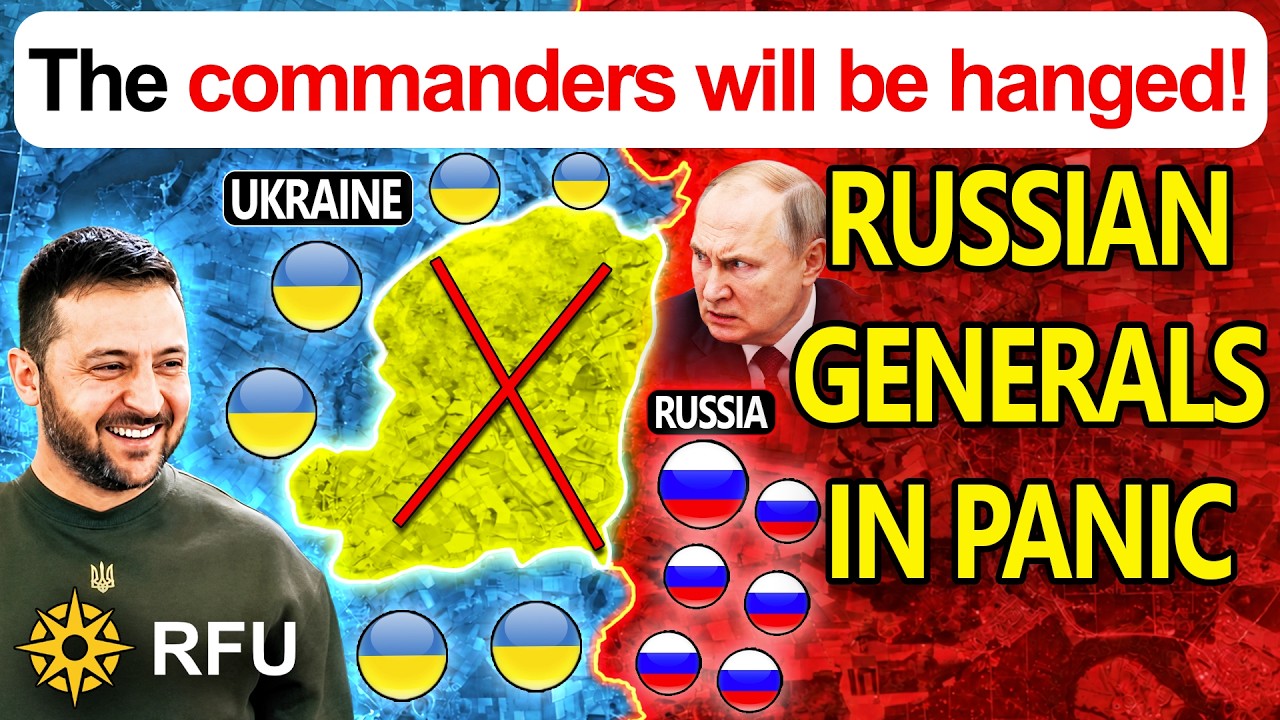
Russian military channels are reacting with anger to the Russian retreat around Liman, where Ukrainian counterattacks have erased Russian gains west of the Zherebets River. Kremlin-affiliated commentators acknowledge in panic the Ukrainian initiative around the sector while criticizing exaggerated Russian reporting, demanding that Russian commanders be hanged. The embarrassment became particularly visible at Sviatohirsk, claimed captured by Putin, based on AI-fabricated videos of Russian soldiers inside the town, only for the Third Army Corps commander Andriy Biletskyi to subsequently film himself walking there openly, demonstrating continued Ukrainian control and the relative safety inside that allowed him not to wear a helmet. For Russian analysts, the deeper problem is that fabricated victories eventually corrupt battlefield decision-making. Once one Russian commander reports an imaginary advance, neighboring units and higher headquarters begin planning around territory that Russia does not actually control. A Russian analyst explicitly warned that falsely declaring settlements captured can prevent Russian forces from striking them because headquarters believes friendly troops are present there, which gives the Ukrainians more freedom to operate.
The consequences multiply, as artillery may withhold fire from Ukrainian positions incorrectly marked as Russian. Reinforcements can be ordered toward supposedly friendly strongpoints only to encounter Ukrainian ambushes. Supply vehicles can follow routes assumed to be secured but actually covered by Ukrainian drones. Russian assault groups can also receive objectives based on imaginary starting lines, while reserves are committed to rescuing positions that were never held. Eventually, commanders must conduct emergency crisis management, consuming several times the manpower that an accurate assessment might have required.
Russian commentators therefore increasingly demand punishment and accountability for officers responsible for these beautiful fake reports that make their way up to the Kremlin. The Sviatohirsk episode made the absurdity especially obvious and catalyzed Russian discontent, as the fabricated footage purporting to demonstrate Russian presence was torn to pieces by Biletsky’s appearance.
The pattern resembles earlier Russian information failures around Kupiansk, when Russian sources repeatedly presented infiltrations and flag-raising footage as evidence of much deeper control, including material that analysts assessed as AI-generated. Yet Ukrainian clearing operations continued, contradicting the picture of secure Russian control. Similar paradoxes have appeared in the Dnipropetrovsk Region, as Ukrainian counteroffensives during the previous months reversed significant Russian gains, while geolocated evidence showed Ukrainian troops operating where Russian sources had previously claimed advances. Around Stepnohirsk in Zaporizhzhia, a Kremlin-affiliated military analyst admitted that false reporting had actually prevented Russian forces from properly establishing logistics and clearing territory they supposedly controlled. Ukrainian forces subsequently continued contesting positions around the area.
This is why Liman potentially represents something larger than another tactical setback. Russia’s leadership has placed enormous pressure on commanders to demonstrate constant progress. Putin continues publicly portraying Russia as winning, even as independent battlefield assessments show much slower advances and repeated Ukrainian counterattacks and successes. When genuine Russian advances become increasingly expensive, producing impressive reports is easier than producing territorial gains. But once AI-generated videos, manipulated flag-raisings, and fictitious captures enter the operational reporting chain, propaganda begins damaging the army producing it.
Overall, the Russian retreat from Liman and the claimed capture of Sviatohirsk that never materialized are the latest examples of how political leaders can announce victories, headquarters can draw optimistic maps, and commanders can report settlements captured, but Ukrainian soldiers remain there. The resulting outrage among Russian military commentators reflects recognition that somebody must eventually pay for the fiction. When reality finally catches up with the reports, Russian commanders rarely admit that previous victories never happened, as they fear paying the price with their heads, so they sacrifice additional soldiers, trying desperately to make the false map real.

💎 Help us expand the coverage! Subscription starts from just $4.99! Get 50% OFF full access to the map + exclusive strategic updates: https://www.rfunews.com/pricing
Today, the biggest news comes from the Kupiansk direction.
Recently, the Ukrainian Khartiia assault regiment shared footage of them destroying one Russian vehicle after the other. Ukrainians used both conventional FPV drones as well as newly received strike drones to strike Russian trucks bringing large numbers of reinforcements and supplies into the sector. The footage also shows Ukrainians striking Russian tanks, being used in the rear as artillery pieces to fire indirectly against advancing Ukrainian formations in the Dvorichna bridgehead. The unit reports that they have successfully struck and destroyed eighty-one Russian motorized vehicles, and eleven armored vehicles.
This is taking place as Ukrainian and Colombian fighters are pushing hard into the Russian Dvorichna bridgehead, which are now beginning assaults into Dvorichna itself after splitting the bridgehead in half earlier last week. As you might remember, Ukrainians had successfully targeted and suppressed Russian drone operators in the sector, allowing Ukrainian and Colombian formations to assault and cut off Russian positions without having to worry about intense Russian drone strikes. This means that Russian forces have lost their primary way of countering Ukrainian assaults, and therefore have to fall back on striking Ukrainian units with indirect artillery fire, as well as flooding the frontline with infantry to halt the Ukrainian advance.
The shared footage showcasing the massive destruction of Russian armored and motorized vehicles deployed to these efforts is evidence of the Ukrainian response. As Russians continued to move up more forces to counter Ukrainian advances, Ukrainians successfully denied Russians this opportunity by instituting a drone fire control lockdown of Russian logistics. Russians themselves have even shared footage of the approaches to Kupiansk and the Dvorichna bridgehead. The video shows Russian soldiers on motorbikes maneuvering around the wrecks and remains of earlier reinforcements destroyed en route to the front.
Separate footage shows how Russians continue to attempt to bring up more armor into the forest on the eastern bank to provide fire support and alleviate the pressure on their strained lines. The video shows the tank moving clumsily through the densely forested area, with the crew trying to find a position to fortify and fire from. Naturally, the hulking behemoth was quickly spotted and immediately came under Ukrainian FPV kamikaze drone strikes. With the improvised armor of the tank allowing it to sustain several more hits, Ukrainians finally disabled and destroyed the vehicle with carefully placed shots by the drone operators.
Due to the Ukrainian lockdown of Russian approaches to the bridgehead, very few Russian reinforcements are actually making it through and surviving long enough to cross the Oskil River. Nevertheless, the Ukrainian-Colombian attacks continue, and the pressure is forcing Russian soldiers to emerge from their hideouts, with orders from their commanders to counterattack despite the lack of artillery support or drone cover. As the lack of fire support means that Ukrainian drone operators are not suppressed in turn, a true hunt on Russian infantry has opened in the bridgehead. Ukrainians are sharing large amounts of footage that shows them striking Russian infantry with FPV drones. Heavy and light bomber drones are flying almost around the clock, dropping grenades and bombs on Russian soldiers that move out in the open or try to find cover with inadequate overhead protection. Many Russian soldiers are now simply dying in the shrubbery, as the carnage is quickly piling up.
Overall, the Ukrainian advance continues, as Russian efforts to counterattack are being undermined before they can even begin. With Ukrainian strike and FPV drones taking out Russian reinforcements and fire support in the rear, there is very little to stop Ukrainians from continuing their advance. Simultaneously, intense FPV and bomber drone support for the Ukrainian counterattacks themselves are dealing devastating losses to the Russian soldiers still under attack in the bridgehead, softening up the Russian defenses here. While Russians could use their superiority in aviation glide bomb strikes to halt Ukrainian advances, Russians do not have unlimited availability of these assets, and with the majority of Russian resources being focused on the fighting in Donetsk, Russian forces at Kupiansk may have to make do with what little is made available to them.

🔴 YOU ARE MISSING HALF OF OUR VIDEOS! Subscribe to unlock all out reports and support our work: https://www.youtube.com/channe....l/UCcNB1tZYpeDetqCad
Today, Russian military analysts officially confirmed that Russian forces have retreated from the last section of the Dnipropetrovsk region that they had managed to take under their control. The fact that even typically pro-war Russian sources are admitting this is particularly revealing. Rather than blaming overwhelming Ukrainian superiority alone, several Russian analysts angrily point to failures within Russia’s own command structure, which failed to provide the reserves that could have stabilized the sector, leaving the Russian group of forces East without enough manpower to hold its positions. The criticism extends beyond battlefield conditions to the General Staff itself, with open accusations about poor force allocation, systematic planning failures, and the inability to transition from offensive operations to an organized defense.
The withdrawal comes after weeks of relentless Ukrainian pressure in what became one of the most difficult sectors for Russian troops. The Seventy-Ninth Air Assault Brigade released footage showing enemy infiltration groups from the Russian Ninetieth Tank Division being detected almost immediately after moving forward and then systematically eliminated with FPV drones, bomber drones, artillery, and follow-up clearing operations by Ukrainian special forces operators. This is only one example of what has happened along the entire line, with full Russian battalions suffering devastating losses attempting to maintain positions under constant aerial surveillance until being completely eliminated. Instead of establishing stable defensive lines, many units were reduced to rotating small infantry groups into exposed positions where they were hunted continuously. The cumulative attrition eventually made holding the remaining foothold increasingly difficult, even before the shortage of reinforcements became critical.
The main reason reinforcements never arrived appears to be Russia's strategic prioritization of Donbas. Capturing the remaining Ukrainian-held territory in the Donetsk Region remains Vladimir Putin's primary military objective, and available reserves continue flowing toward that part of the front line instead of secondary sectors. This leaves commanders elsewhere, like in Dnipropetrovsk, forced to defend with increasingly exhausted formations. Logistics compounded the problem, as the village of Bahatyr, serving as Russia's main supply hub in the last area under Russian control here, has been heavily devastated after prolonged fighting. Its destruction severely complicates concealment of equipment, ammunition, and troop concentrations. Even if additional reserves had become available, moving and sustaining them through such an exposed logistical node would have been increasingly difficult under persistent Ukrainian reconnaissance and strikes. Faced with mounting losses, insufficient manpower, and deteriorating supply conditions, Russian commanders appear to have concluded that maintaining the remaining positions was no longer practical, so the remaining forces retreated under heavy Ukrainian fire.
This withdrawal also completes a broader Ukrainian effort across the area where the Dnipropetrovsk region borders both the Donetsk and the Zaporizhia regions. During recent weeks, Ukrainian counteroffensive operations steadily liberated settlements and pushed Russian troops back across multiple sectors. The remaining pocket represented the last fragment of Russian control inside the region, but Ukrainian advances gradually compressed this position from several directions until the Russians found themselves defending a salient with shrinking logistical support and no realistic prospect of reinforcement. Instead of launching another costly attempt to stabilize the front, Russian forces ultimately abandoned the area altogether.
Overall, the outcome in the Dnipropetrovsk Region shows how Ukrainian battlefield pressure and wrong Russian priorities can combine to produce operational collapse for the Russians. Ukrainian counteroffensives inflicted the initial setbacks, but the decisive factor was Russia's inability to reinforce the sector after concentrating all available reserves on the Donbas campaign. As Ukrainian attacks continued, Russian commanders found themselves without fresh units to plug the widening gaps. The result was not merely another tactical withdrawal under fire but the complete loss of Russia's remaining foothold in the Dnipropetrovsk Region, achieved through sustained Ukrainian counterattacks and a Russian command structure that effectively sacrificed this sector to sustain another.

The U.S. military says all American troops have now left Iraq, officially ending a 12-year mission focused on fighting ISIS. The final U.S. forces departed the last air base in northern Iraq under an agreement between Washington and Baghdad. The withdrawal comes as the U.S.-Iran war continues, with fighting and tensions at times spilling over into Iraq.
A cockpit incident onboard an Israeli plane lead to a hijacking scare causing the plane to be diverted. Israeli Prime Minister Netanyahu's office says "The incident is under control, and all measures are currently being deployed in order to return the Israeli passengers safely to Israel."
Subscribe to LiveNOW from FOX! https://www.youtube.com/liveno....wfox?sub_confirmatio
Where to watch LiveNOW from FOX: https://www.livenowfox.com
Follow us @LiveNOWFOX on TikTok: https://www.tiktok.com/@livenowfox
Raw and unfiltered. Watch a non-stop stream of breaking news, live events and stories across the nation. Limited commentary. No opinion. Experience LiveNOW from FOX. Live news streaming channel when and where you need it.
